Truck Terminal and Cross-Dock Buildings in Wyoming
Rawlins, Rock Springs, Green River and Evanston all sit on I-80, and each has a Union Pacific line close by. Between them is a lot of blowing snow, closed gates and trucks parked waiting for the road to reopen. A trucking company that works that corridor wants a terminal that can turn a trailer fast, keep drivers and freight out of the weather, and sit close to the ramp. That is the job a truck terminal or cross-dock building does.
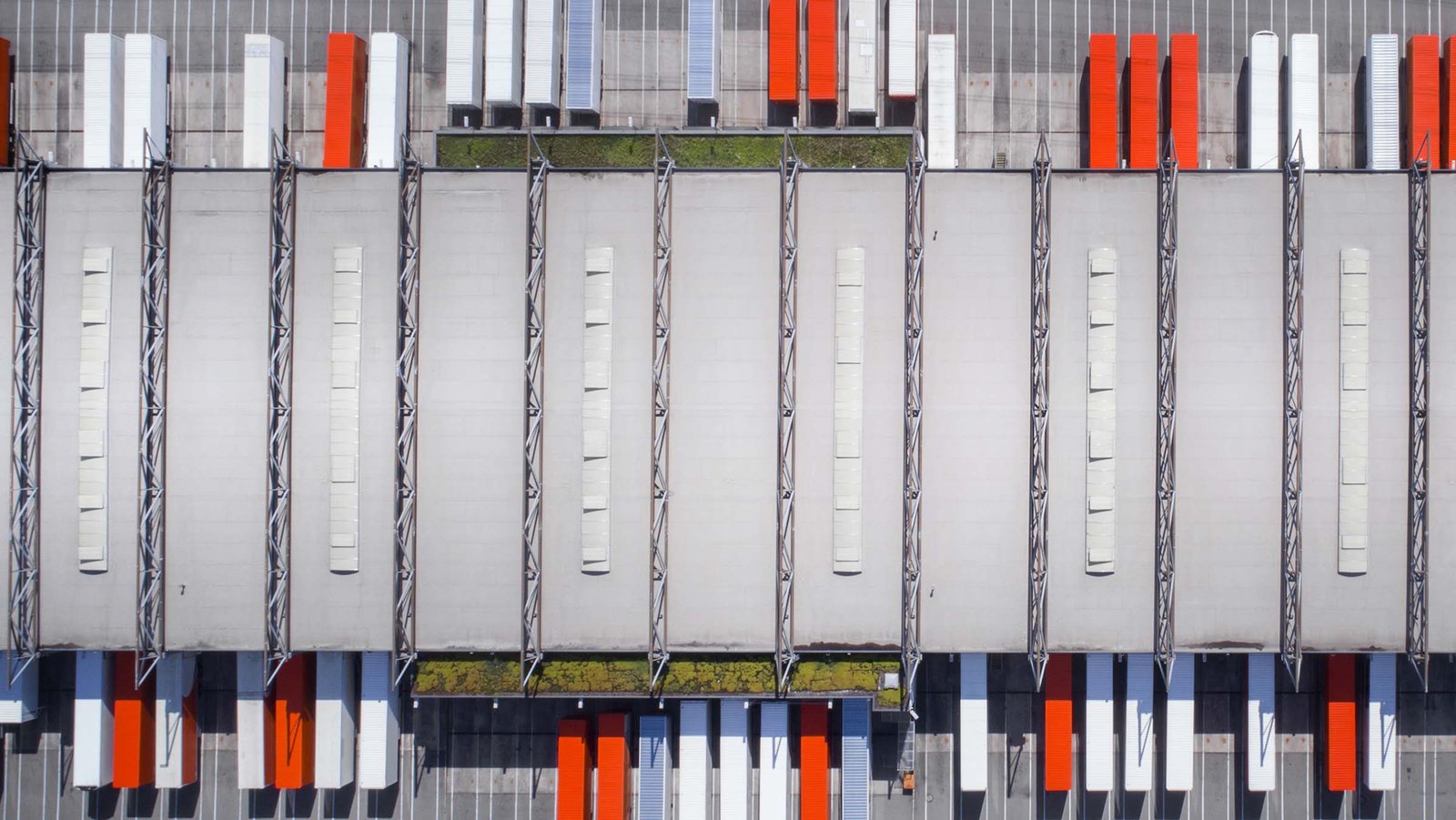
A cross-dock is a long, narrow building with doors on both long sides. Freight comes off an inbound trailer, gets sorted on the floor, and goes onto an outbound trailer, often without ever being put away. Because freight sits for hours rather than weeks, the floor, the doors and the yard matter more than the roof. Terminals also include a driver room, a dispatch office, a small shop bay and, in many cases, a fuel island or wash bay.
We build these as steel buildings with a heavy slab, a long dock wall, and a yard we help you lay out. If your operation holds inventory as well as moving it, the distribution center page explains the difference. For a sorted-freight building that blends with a shop, see flex light industrial.
The building, door by door
The dock wall carries the load. Doors are spaced to suit the trailers you run, usually on a regular rhythm with a pier between each. We frame each opening with a header sized for the dock seal or shelter, a bumper and a leveler pit. If you cross-dock, both long walls get doors, and the floor between them stays clear of columns or has a column line you can work around.
The rest is plain. A pre-engineered frame covers the span, panels close it in, and the office and driver area sit at one end. The shop bay, if you have one, gets its own overhead door and floor drain, and a sump or oil separator when the local rules call for it. A commercial metal building package covers these items under one contract.
Yard, approach and where the snow goes
A terminal is a yard with a building attached. Trailers need a turning path, a staging area and a clean approach from a public road. I-25 runs concurrent with US 87 through Douglas, with I-25 Business through the center, and which road you front affects both your door layout and your site approach. Douglas is on the banks of the North Platte River with a Union Pacific line between Omaha and Casper, so the lot may have drainage, flood and rail setback questions that others do not.
Snow management is a big one. A yard that cannot hold plowed snow ends up with berms in front of the doors by February. We reserve piling areas and draw drainage so melt does not flow back into the building. Pavement is the other cost: a concrete apron at the dock takes trailer landing-gear loads that asphalt will not, and we price it into the plan from day one. See Douglas for what we know about that part of the state.
Lighting, traffic and driver safety
Cross-dock buildings are busy with forklifts, trucks and people on foot. We provide lighting at the dock and yard, marked pedestrian paths, wheel chocks or vehicle restraints and, where an owner wants them, signals at each door. Walk doors are placed away from truck traffic, and the office has a view of the dock. Winter makes everything slower, so heated floors or radiant heat at the doors help keep ice off a dock apron.
Fire and life safety depend on what is stored and for how long. Hazardous materials need separate handling, and the local fire marshal will have a say. We bring those questions to the first meeting, not the last, because a late requirement for a sprinkler or fire pump can add real cost to a building that was designed without one.
Permits and local rules
The International Code Council reports that Wyoming has no single statewide building code. Cities and counties adopt and enforce codes locally. State statute 35-9-121 delegates enforcement to qualifying counties and municipalities, which must adopt or maintain standards at least equal to the state's within six months after new codes are adopted. So a terminal in Evanston and one in Rawlins can run on different dates and different amendments.
Zoning is as important as the code. A truck terminal usually requires industrial or heavy-commercial zoning, a site plan, an access permit if you connect to a state highway, and sometimes a storm water plan. We help you identify the permits early. An approval timeline in a small town is often quicker than in a larger one, but a new access onto a highway can add months.
What a terminal costs and why
The building is the smaller number. Dock doors, levelers, seals, lighting, a thick slab and pavement for a big yard add up quickly. The cheapest way to cut cost is to keep the building simple and the door count correct. Extra doors cost real money to build and to maintain, and too few doors cost real money in waiting trucks. We run a door study based on how many trailers you turn per shift. Owners weighing concrete panel walls against a steel frame for a terminal can read about tilt-wall construction versus steel.
We separate dock equipment from the shell in our price, since dock equipment vendors vary and owners often choose their own. The structural steel erection trade partners set the frame, and we coordinate with the dock vendor so pits and attachment points line up. Our automotive and fleet page shows how this fits with shops for fleet vehicles.
Plan your terminal
Give us the number of trailers you turn per day, the doors you want and your site. We will draw a building and yard plan and price it.
Common Questions
How many dock doors does a cross-dock need?
It depends on how many trailers you turn and how long each takes. Doors on both long walls let you move freight straight across. We count peak trailers per hour, estimate load and unload time, and add a margin. Adding doors later is possible but means cutting framed wall, so we plan spare positions at the start.
Do I need concrete in the yard?
At the dock apron, yes: a concrete pad holds up under trailer landing gear and braking forces that asphalt cannot. Elsewhere in the yard, asphalt may be enough. We price a concrete apron and an asphalt yard together so you see the combined cost.
Can the building include a shop bay?
Yes, and many do. A shop bay needs a tall overhead door, a drain, ventilation and sometimes an oil separator. Local rules may call for fire separation between the shop and the dock, so we ask your building official early.
What wind and snow numbers apply along I-80?
Towns publish their own. Evanston uses 100 to 110 mph wind and a 40 psf minimum snow load, with 60 psf in basin areas. Other towns along the corridor have different numbers, so we confirm them with each building department. Sliding snow near truck doors is a design item we handle too.
How fast can a terminal be ready?
The steel building goes up quickly. The pavement, utilities and permits set the real schedule. We give you a calendar with site work, steel delivery, erection and dock equipment installation, and flag the items that depend on weather.
Related
Ready to talk about your project?
Request a Project Review