Structural Steel Erection in Wyoming
Wind decides when steel gets set in Wyoming, not the schedule. A crane can lift a column on a calm morning and sit idle all afternoon when the gusts pick up. Crews who erect steel here plan around it: early starts, tag lines on every pick, lifts stopped at the crane operator's call and a daily look at the forecast. That is the difference between a frame that goes up straight and one that fights you all the way.
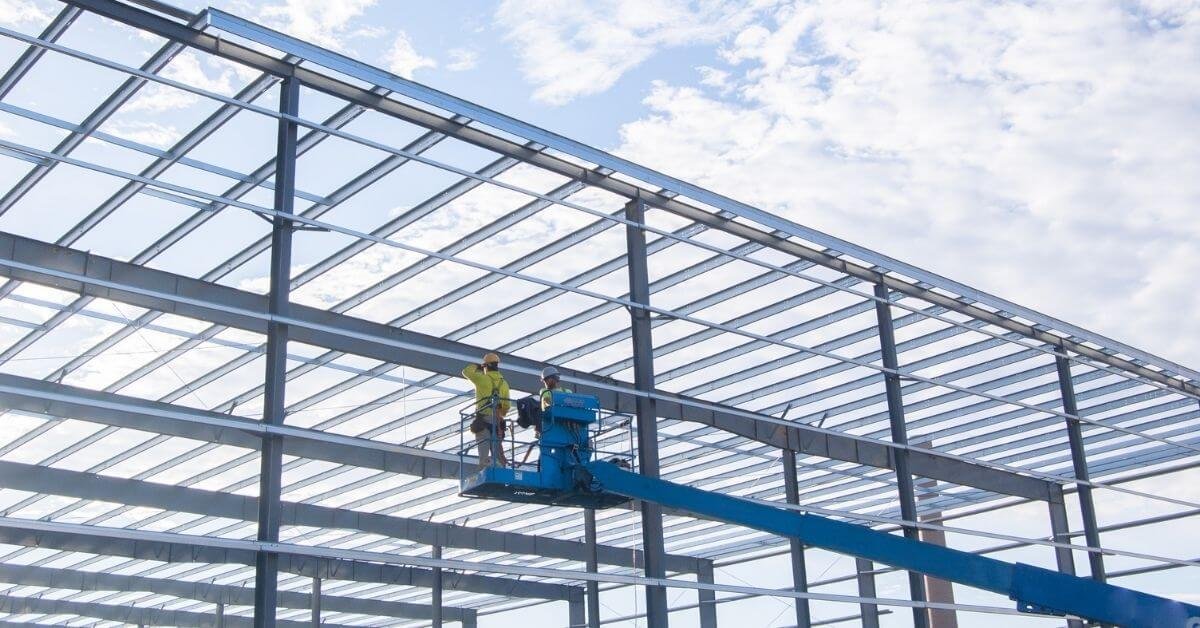
Structural steel erection is the physical act of turning delivered members into a stable frame. Columns are set on the anchor bolts and plumbed. Beams and rafters are lifted, bolted and braced. Purlins and girts go in, then bracing and cross-bracing tighten everything up. On a pre-engineered building, the pieces come marked and drilled, and our job is to put them in the right order. On a conventional steel job, we also handle field fit-up, connections and some welding.
We erect steel for new pre-engineered buildings, for conventional framed structures and for additions to existing frames. If you are the owner, you can hire us for erection only, or as part of a full package including rigid frame erection, panels and finish. If you are another contractor, we offer erection as a subcontract on your steel.
Our trade partners, our cranes, our rigging
We erect with our trade partners, using cranes and lifts sized to the job. A typical pre-engineered building needs a crane for columns and rafters and a lift for the secondary framing. A tall or heavy structure needs a bigger crane and a more careful lift plan. We pick equipment by the heaviest pick and the longest reach, then add margin for wind.
Our foremen read the shop drawings before the steel arrives. They check piece marks against the packing list, lay out members by erection sequence and make sure the foundation bolts match the drawings. If a piece arrives wrong, we flag it the day it shows up so the manufacturer can ship a replacement before the crew runs out of work. That attention to receiving saves weeks on a tight job.
Fall protection, plumbing up and crane lifts
Steel erection is regulated work, and we run it that way. Every worker on the frame wears fall protection. Columns are plumbed and guyed before the crane lets go. Beams are connected with at least the required bolts before the rigging is released. Crane lifts have a planned pick, a signal person and a clear radius. Weather stops work, and nobody argues about it.
Our site plan includes daily toolbox talks, equipment inspections and a layout for material laydown so trucks do not block the crane's swing. We keep a written lift plan on heavier picks and tell the owner if any lift passes over an occupied area. If your insurance requires a specific safety program, we follow it.
Sequencing the frame so the roof goes on early
Erection runs bay by bay from a braced starting point. We set the first braced bay square and true, then work outward so each new bay ties into one that is already stable. Purlins and girts follow the rafters closely, and the roof panels start while the far end of the frame is still going up. That sequence keeps the structure stable in wind and gets the building closed in sooner.
Delivery timing drives everything. The steel arrives in bundles, and the erection trade partner needs room to stage it. We plan truck arrivals against the erection sequence and coordinate with the foundation and anchor bolt work so the bolts are set and cured before the first column goes up. If the supplier is late, we shift to another task and bring the crew back when the steel is on site.
Big projects are pulling steel crews across the state
Wyoming has several very large projects in various stages. TerraPower began non-nuclear construction at Kemmerer in June 2024 for its Natrium plant, and the NRC agreed to issue the construction permit in early March 2026. The Chokecherry and Sierra Madre wind project starts about 3 miles south of Rawlins and plans about 600 turbines up to 390 feet tall. In Cheyenne, Meta's data center project cites more than 1,000 skilled trade jobs at peak.
Pacific Soda's proposed Dry Creek trona project near Green River would average about 2,100 construction workers and peak near 4,200. When projects like these draw crews, smaller owners notice: steel erectors, cranes and lodging get tight. We tell you early if the calendar might collide with a large regional project, and we book crews and equipment with the owner's schedule in mind.
Site access, soil and the crane pad
A crane needs a firm, level pad, and in many Wyoming locations the ground is either rock or frost-heaved clay. We check the crane path on the first walk-through and price gravel and compaction when the soil calls for it. Overhead power lines, tight lots and sloping sites change the lift plan, and we like to hear about them before the contract is signed.
We also plan for the end condition. A frame that ties into an existing building needs careful survey and shimming. A frame next to a drop-off or river needs a different crane position. Our high-bay crane-ready buildings work shows how heavy industrial frames add further complications, from runway beams to extra bracing.
Drawings, inspections and who is responsible
For pre-engineered buildings, the manufacturer's engineer is responsible for the frame design and the erection drawings define the sequence. For conventional steel, the engineer of record produces the structural drawings and a fabricator produces shop drawings. The building department inspects bolting and, if applicable, welding. We keep bolt records and torque notes with the job file.
Wyoming has no single statewide code that every jurisdiction must follow, so each building office tells you what edition applies. The state adopted the 2024 International Codes on June 28, 2024. We confirm the edition, special inspection requirements and any third-party testing needs before erection starts. For industrial projects, our manufacturing clients often ask for a quality plan; we write one if you need it.
Book a crew and a crane
Send us the frame drawings or the building size, the site and your target dates. We will come back with an erection price, a crew schedule and the equipment we would bring.
Common Questions
How much wind is too much to lift steel?
There is no single number, but the crane manufacturer's limits and the operator's judgment control it. Many lifts stop when gusts reach the range where loads start to swing. We set an early start time, use tag lines and call it when conditions are not safe. We build weather days into the schedule.
Can you erect steel supplied by someone else?
Yes. If you already bought the frame, we can erect it, provided we have the erection drawings and a proper delivery. We check the packing list against the drawings on arrival and report any shortages immediately. We also check the anchor bolts before the first lift.
What do you need from me before you can price erection?
The building size, eave height, the frame drawings or the manufacturer's name, the site address and any access limits. If you have a soil report or a survey, send that too. With those, we can give a working price and a crew plan.
Does erection go slower in winter?
Often, yes. Short days, cold hands and snow on the steel slow production. Ice on bolted connections is a safety hazard, so we clear it before work. We tell you what winter does to the schedule so you can compare it with a spring start.
Will large regional projects affect my schedule?
They can. TerraPower's work at Kemmerer, the wind project near Rawlins and proposed work like Dry Creek near Green River all draw crews and cranes. We book equipment early and let you know when a regional crunch could push your dates.
Who inspects the bolting?
The local building department, and sometimes a third-party special inspector hired by the owner or engineer. We keep records and make the bolts and connections accessible for inspection. If an inspector wants a particular check, we plan the sequence so nothing is covered up too soon.
Related
Ready to talk about your project?
Request a Project Review