Standing Seam Metal Roofing in Wyoming
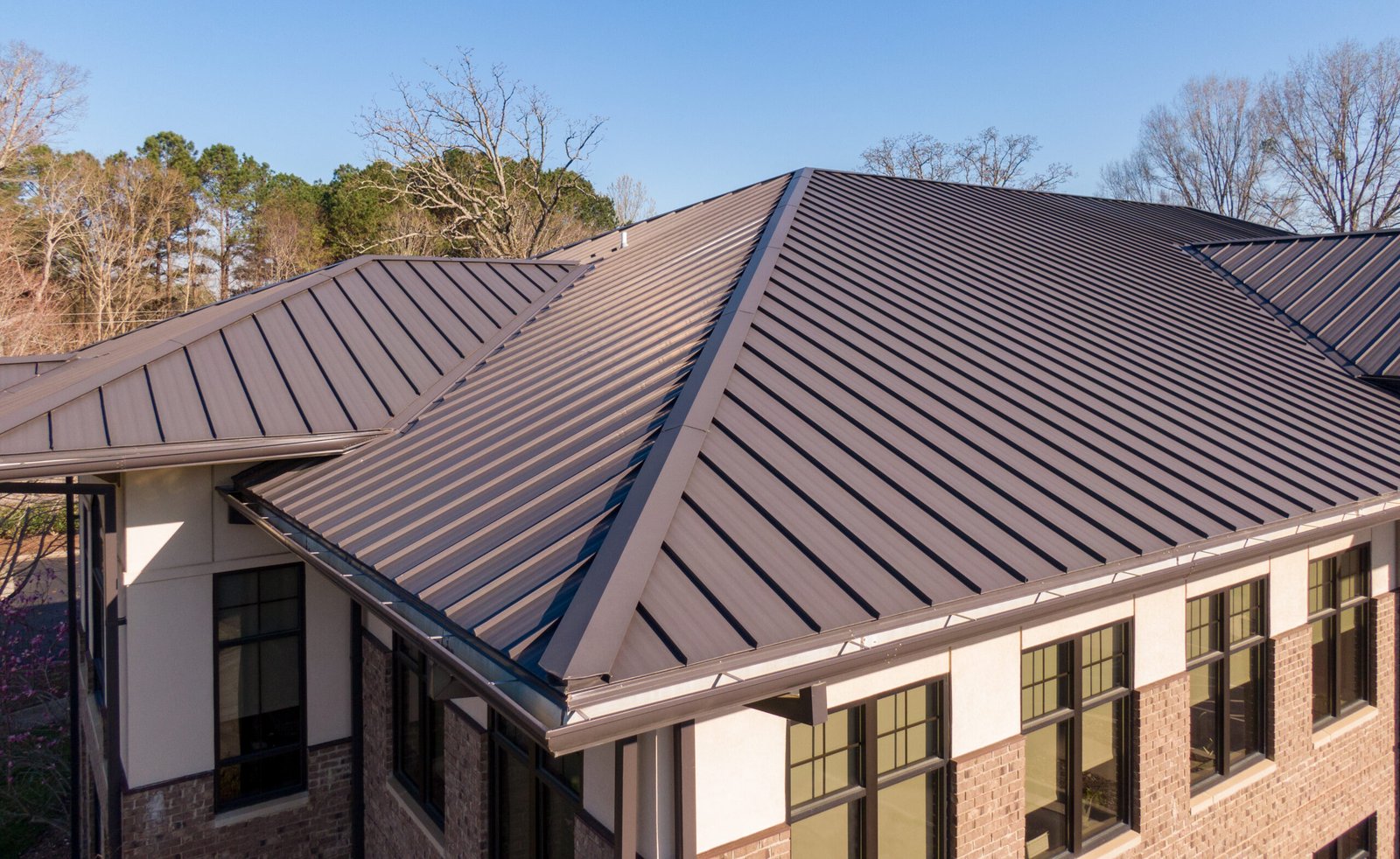
Jackson takes about 78 inches of snow a year, and a roof there has to carry it, shed it and stay tight while the sun cycles it from frozen to hot. Standing seam roofing is built for that job. The panels run from eave to ridge with raised seams that lock together, and the fasteners sit under the seam instead of through the face of the metal. Fewer holes through the roof means fewer places for wind-driven snow to find a way in.
We install standing seam on new metal buildings, on older buildings that have outlived a screw-down roof, and on commercial and public structures that need a roof they will not have to think about for a long time. The system floats on clips that let the panels expand and contract without tearing at the fasteners, which matters in a state where a single town can see more than a hundred degrees of temperature range over the years.
We answer the price question early. A standing seam roof costs more than an exposed fastener roof per square foot, and it earns that cost back in fewer repairs, no fastener back-out and a cleaner shed of snow. We show you both options with the difference spelled out.
How we install a standing seam roof
The roof starts with the deck and the underlayment. On a new building the purlins set the surface. On a retrofit, we survey the existing roof, decide whether to go over it with a new framing system or tear it off, and plan the insulation. Clips are attached at the specified spacing, panels are snapped or seamed in sequence, and the seams are mechanically locked with a seaming machine on the roof.
Details decide whether a roof leaks. Ridge, eave, rake and penetrations are formed and sealed with the manufacturer's trim. We install snow retention where the design calls for it, so that sliding snow does not drop on a door, a walkway or a parked truck. We also pay attention to panel length, since a panel that is too long for the thermal movement of the clip will buckle.
Wind, snow and uplift
The roof is checked against the local wind and snow design loads, and uplift near the edges and corners is much higher than in the middle. Teton County's design criteria list a 105 mph basic wind speed and direct designers to the ASCE Hazard Tool for ground snow load, and Jackson's own heavy snowfall makes that load number central to every roof detail. Panels, clips and clip spacing all follow from those loads.
Manufacturers test their systems under standard uplift procedures and publish approvals, which we attach to the permit submittal. Roofs on a building with a roof structure that is old or unknown also need a structural check before adding weight. We ask for the drawings or run a field survey and tell you what the roof can carry.
Pitch, thermal movement and snow behavior
Low-slope roofs hold snow longer and rely more on seam quality, and steep roofs shed snow in a hurry. Neither is wrong, but the building below has to be planned for what happens. A roof that dumps over an entrance is a hazard, and one that holds snow into spring may need a stronger frame. We talk through which behavior fits the use.
Thermal movement is the other big factor. Buffalo, for instance, has recorded a high of 106 F and a low of minus 40 F, and metal expands and contracts through that range. Standing seam clips and slotted trim let the roof move without ripping at the seams. A properly detailed roof can shift hundreds of times a year without damage, while a poorly detailed one will start to leak at the first fixed point.
Timing a roof job
Standing seam panels are usually rolled to length from coil, so we order them once the building dimensions are confirmed. Lead time depends on the supplier, the color and the panel profile. Panels run long, and they need clean, dry conditions during installation, which is why roofing is scheduled between the freeze and the thaw, not during a blizzard.
On a reroof, we try to keep the building in service. We work section by section, close up at night, and tarp any open area. Owners with heat on in January should tell us that early, so we plan the work in short windows and protect what is below. A good plan also leaves room for the days we lose to wind.
Where standing seam makes sense
Public owners favor it for long life. A school, a courthouse annex or a county building is a natural fit for a roof that outlasts several budget cycles, and the government and municipal page explains how we approach those jobs. Public works departments use it on shops and salt sheds as well.
Retail and commercial buildings use standing seam for appearance and durability, and our retail shopping center page covers storefront roofs. For a complete envelope, pair the roof with insulated metal panels, or choose a re-skin or retrofit if the building underneath is sound. Mountain towns like Jackson and high plains towns like Buffalo both ask for it, and the commercial metal buildings we erect often get one from day one.
Get a roof number
Send us the roof size, pitch and location, plus photos if it is a reroof. We will price standing seam against a screw-down roof and give you the install window.
Common Questions
Is standing seam worth the extra cost?
In snow country, usually yes. The concealed fasteners remove the most common leak point, and the seams are tight enough to resist wind-driven snow. You pay more at the start and less on repairs. For a short-lived building with low value, an exposed fastener roof can be the right call.
How long does a standing seam roof last?
Manufacturers warrant the finish for a stated term, and the metal itself can last much longer when it is detailed correctly. We do not make promises about service life beyond what the manufacturer's warranty states. What we do promise is that we install to the manufacturer's instructions and document it.
Can you put standing seam over an old roof?
Often, yes. A retrofit system sits on new framing above the old roof, which avoids a tear-off and keeps the building dry. We check the structure for the extra weight and the old roof for moisture before we start.
Will snow slide off and hurt someone?
It can, which is why we plan snow retention. Snow guards or rail systems hold snow in place and let it melt gradually. Over a door, a walkway or a fuel pad we add them as a standard safety step.
What color holds up best in strong sun?
Factory finishes are tested for fade and chalk, and lighter or mid-tone colors tend to show less change. Pick based on appearance and the manufacturer's finish warranty. At high elevation the sun is intense, so ask for the strongest finish offered.
Related
Ready to talk about your project?
Request a Project Review